Creative Ways to Give Kids Money for Christmas
Pick their age, how much you're giving and what the gift should teach. Get three fun ways to hand it over, each with a small money lesson inside.
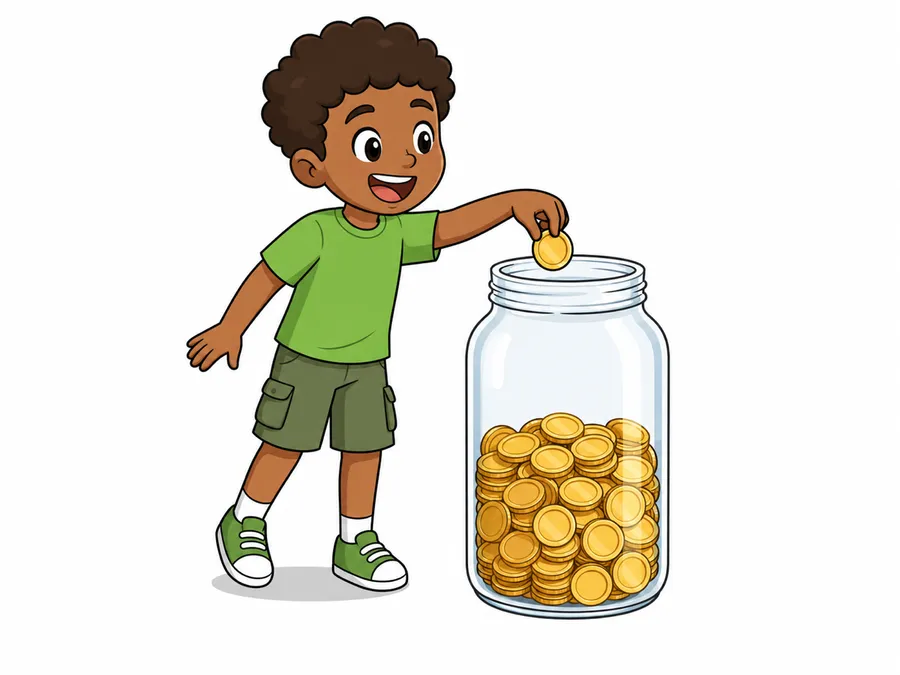
What are fun ways to give kids money for Christmas?
The fun is in the reveal. Roll bills into a money balloon, stuff a long chain of bills into a tissue box, hide envelopes for a Christmas morning money hunt, or wrap the cash in a box inside a box inside a box. For a young child, a clear ornament full of rolled bills can hang right on the tree.
Then add a small lesson so the money has a plan: a savings match certificate, a give envelope for a cause they pick, a first investment letter, or a split card that says how much to spend, save and give. The picker below matches three ideas to your child's age, your budget and the lesson you want. Every idea works for Hanukkah, birthdays and graduations too.
Parents: let the gift keep teaching
Add the money to your child's Penny Time balance with a note, like "From Grandma." On their own phone or tablet, they watch it land, take on quests and ask to cash out, and you approve each request. Free for the whole family.


Fun ways to give money as a gift
Each of these makes opening the money the best part, and each one comes with a split card: a note that says how much to spend, save and give. Use the birthday money calculator to fill in the split for any amount. It works for Christmas money too.
Money balloon
Roll the bills tight, push them into a clear balloon with some confetti, then blow it up and tie it. They pop it to get the money. Tape a split card to the string that says how much to spend, save and give. Popping takes a second, and the card slows the money down.
We list this one for ages 8 and up because the CPSC warns that children under 8 can choke or suffocate on uninflated or broken balloons. Pick up every piece after the pop.
Ages 8 to 17. Works with any amount.
Pull-out money tissue box
Tape the bills end to end with small pieces of tape, fold the chain back and forth, and stuff it into an empty tissue box. They pull out one long string of money. Ask them to count out loud as they pull and say the total at the end. Then the split card decides where each bill goes.
Ages 3 to 17. Works with any amount.
Christmas morning money hunt
Hide the money in a few envelopes around the house, each with a clue to the next spot. The last clue leads to three jars labeled Spend, Save and Give. Put a different amount in each envelope so they keep a running total. At the end, they sort the money into the jars.
Ages 5 to 12. Works with any amount.
A box inside a box inside a box
Wrap the money in the smallest box you have, wrap that inside a bigger box, and keep going. The last box holds the cash and a split card. Every layer is a small lesson in waiting. When they get to the money, the split card shows them how to divide it.
Ages 3 to 12. Works with any amount.
Frozen cash block
Seal the bills in a zip-top bag, put it in a container of water and freeze it. On Christmas morning they get a block of ice with money inside. Getting it out takes a while, so use the melting time to fill in the split card together.
Ages 6 to 14. Best under $100.
Folded money ornaments
Fold bills into simple fans, bow ties or stars and hang them on the tree with ribbon. Use $1 bills if you want a full tree. Before they unfold a single one, ask them to plan the money: what to spend now, what to save and what to give.
Ages 7 to 17. Works with any amount.
Coin sorting stocking
Fill the toe of the stocking with real coins mixed in with foil-wrapped chocolate coins. They sort out the real coins, count them and can trade a pile of quarters for a bill. Little kids love counting their own money, and it's good practice.
Ages 5 to 9. Best under $20. Practice with the counting money game.
Money gift ideas that teach saving
A saving gift gives your child a clear reason to wait and a reward that shows up soon enough to matter.
Savings match certificate
Roll up the cash with a ribbon and add a certificate that looks official: a gold star sticker, a signature line, the works. The certificate promises a match. For every dollar they save until a date you pick, like March 31, you add 50 cents, up to a cap you can afford.
Ages 6 to 17. Works with any amount. See what a match adds up to.
Now-or-later envelope
Seal the cash in a bright envelope and write the deal on the front: open it now, or bring it back sealed on New Year's Day and trade it for more. Keep the bonus small and sure, like $10 now or $12 on January 1. A young child learns that waiting paid off.
Ages 4 to 10. Works with any amount. Turn the wait into a savings goal.
Money ornament and a clear jar
Roll the bills tight, slide them into a clear fillable ornament with a bit of tinsel and hang it on the tree. Put a clear jar with their name on it under the tree. When the ornament comes down, some of the money goes into the jar and stays there. A clear jar lets a young child watch savings pile up.
Ages 3 to 9. Works with any amount.
12 days of saving envelopes
Number 12 small envelopes and put a few dollars in each. Starting Christmas morning, one more envelope can be opened each day. Celebrating Hanukkah? Make one for each night. They can open each envelope on its day or leave it sealed. Every envelope still sealed on day 12 earns a small bonus from you, so each morning is a choice.
Ages 5 to 12. Best under $100.
Piggy bank with a first deposit
Wrap a new piggy bank with the gift already inside, and fold a few extra bills small enough to push through the slot. Pushing money through the slot is the lesson: money you put away is still yours, it's just waiting. Count it together once a month.
Ages 3 to 8. Works with any amount.
Photo of the thing they want
Wrap the cash with a printed photo of something bigger they have been wanting, with the price written on the back. The gift gets them part of the way there. Work out together how many weeks of saving it takes to close the gap.
Ages 8 to 17. Works with any amount. Work it out with the savings goal calculator.
First bank account voucher
Put the cash in a small zip wallet with a voucher you made: good for one trip to open your first savings account, with me. An account turns gift money into savings they can check. Have them write down one question to ask at the bank, like what it pays in interest.
Ages 8 to 17. Works with any amount.
Money gift ideas that teach giving
In each of these, part of the gift goes to someone else, and your child picks who. Keep the give share small, like a fifth, so it feels like their choice and not a tax.
Card with a give envelope
Tuck the money into the card as usual, plus a second, smaller envelope marked Give with part of the gift inside, maybe a fifth. The give money is theirs to donate, and they choose where it goes. Ask them to tell you their pick, and why, before New Year's.
Ages 4 to 17. Works with any amount.
Toy they pick to donate
Give this one early in December. Tuck the cash into a card with a note: part of this buys a new toy for a child who needs one, and you get to pick it. At the store, they choose the toy, pay for it and put it in the donation bin themselves. A toy they chose and carried to the bin is giving a 4-year-old can see.
Ages 3 to 8. Works with any amount.
A gift for someone else
Put the money in a small gift bag with a blank gift tag inside that says To: and nothing else. Part of the money is for them to buy a present for someone. They pick the person, stick to the budget and shop with you. Choosing a present with a price limit is a spending lesson too.
Ages 5 to 14. Works with any amount.
Pick-a-cause cards
Set part of the gift aside and wrap three folded cards, each naming a cause you would happily support, like an animal shelter, a library or a children's hospital. They pick one, or split the money between two. Older kids can read up on each one first and tell you what the money will do.
Ages 7 to 17. Works with any amount.
Giving match voucher
Slip a voucher in with the cash: whatever you give away from this gift by January 31, I will give the same amount to the same cause. A giving match shows them their choice counts twice. Agree on a cap first, so it is a promise you can keep.
Ages 8 to 17. Works with any amount.
Food drive shopping trip
Clip the cash to a handwritten list titled Our food drive haul, plus a promise of a trip to the store together. Ask your local food bank or school drive what they need most, then let your child plan the cart and keep it under budget.
Ages 6 to 14. Best with $20 to $100.
Kindness wreath
Clip folded bills around a small wreath with clothespins, and draw a heart on one or two of the pins. The bills on the heart pins go to someone else: a treat for a neighbor, a food bank, a donation box. They decide who, then tell you how it went.
Ages 5 to 12. Best with $20 or more.
Money gift ideas that teach investing
These show a child that money left alone can grow, and that growth takes time. For little kids, the investment is pretend. For older kids, it can be real.
Money garden pot
Plant a bean seed in a small pot and tape a little envelope with the money to a craft stick pushed into the soil. The money stays in its envelope until the bean sprouts, then you add a small bonus. Plants and money both take time to grow.
Ages 3 to 8. Works with any amount.
Sticker growth jar
Put the money in a clear jar and tape a paper chart on the side with a box for each month until summer. Every month the money stays in the jar, they get a sticker in the box and you add a little. That's interest, 5-year-old style.
Ages 4 to 8. Works with any amount.
Savings bond gift certificate
Buy an electronic savings bond as a gift on TreasuryDirect and wrap one of its printable gift announcements. An I bond can't be cashed for 12 months, and cashing it before 5 years costs the last 3 months of interest. So it teaches waiting whether they like it or not.
You need the child's full name, Social Security number and TreasuryDirect account number. A child under 18 gets an account when a parent sets up a linked one. I bonds start at $25.
Ages 3 to 17. Best with $20 or more.
Family bank book
Give the cash with a homemade bank book: a small notebook with their name, today's date and the starting balance on page one. Offer to hold the money in the family bank and add interest on the first of each month, like 5%. Each month they write in the new balance and see interest earn interest.
Ages 6 to 17. Works with any amount. Show them the math with the compound interest calculator.
Business seed money
Label an envelope Seed money and pair it with a one-page plan: what they will sell, what the supplies cost and what they will charge. The money is for starting something small in the new year, like a bake sale or a dog-walking service. Whatever it earns back is theirs. That's investing in yourself.
Ages 7 to 17. Best under $100. Find a small business idea that fits their age.
Stock-picking challenge card
Tuck the cash into a card with a challenge: pick three companies you know and write down today's share prices. On a date you set, say March 1, look the prices up together. Nobody buys anything, but they see how prices move and why guessing is hard.
Ages 10 to 17. Works with any amount.
First investment letter
Give part of the gift as cash, and put the rest into the child's 529 plan or custodial account if they have one. Wrap a letter that explains what you did. The letter says what the money is in plain words and promises a look at the balance together every birthday. That yearly look is when they learn investments rise and fall.
Ages 8 to 17. Best with $50 or more.
A share of a company they know
If they have a custodial account, buy a share, or part of one, of a company whose products they use. Wrap a printout of its logo with the price you paid. Check the price together now and then. It will go up and down, and that is the lesson: owning part of a company means sharing its good years and its bad ones.
Ages 10 to 17. Best with $50 or more.
This is general information, not personalized investment advice, and not a recommendation to buy any investment. Investment results are not guaranteed.
What should my kid do with Christmas money?
Split it before anything gets spent. The spend part is theirs to use however they like. The save part goes somewhere they can see it grow, and the give part goes to a cause they pick. Settle the split before the after-Christmas sales, not in the checkout line.
| Age | Spend | Save | Give |
|---|---|---|---|
| 3 to 5 | 60% | 40% | Skip for now |
| 6 to 8 | 50% | 30% | 20% |
| 9 to 12 | 40% | 40% | 20% |
| 13 to 17 | 30% | 50% | 20% |
These are our starting points, not rules. Under 6, two jars (spend and save) are plenty. By the teen years, let them set their own split and ask to hear the plan. Our birthday money calculator works out the split for any amount and age, so type in the Christmas total and use its numbers. For more on handling gift money all year, see what to do with your kid's birthday money, or the bar and bat mitzvah money plan for a larger one-time sum.
Gift cards count too. Add them to the total, and let your child decide whether a card is spend money or something to hold on to. If you are still setting your own numbers, see our Christmas budget per child guide for what families spend and a sample split.
How to talk to your kid about a money gift, by age
Ages 3 to 5
Keep it to one idea: money buys things, and money you keep can buy something bigger later. Let them hold it and put it in the jar themselves. Try: "This is yours. Let's put some in your jar and watch it fill up."
Ages 6 to 8
Count it together and split it into jars or envelopes. This is the age to add giving, with a cause they can picture, like animals or kids their age. Try: "You have $30. How much do you want for now, and how much should wait?"
Ages 9 to 12
Talk about trade-offs. If they spend $20 today, what bigger thing moves further away? Try: "If you save half of this, you'll be a lot closer to the thing you've been asking for. Your call."
Ages 13 and up
Hand over the decision and ask for the plan. Teens can handle the real terms: interest, a savings bond, a share of a company. Try: "What's your plan for this? Tell me in a week how it went."
Questions to ask after the holidays
- What did you buy, and are you still glad you bought it?
- What are you saving the rest for, and how long will it take?
- Who did you give to, and why them?
- If you got the same amount next year, what would you do differently?
Hanukkah, birthdays and graduations
We lead with Christmas, but none of these ideas depends on it. For Hanukkah, turn the 12 days of saving envelopes into one envelope for each night. The give envelope fits right in: Chabad.org explains that children get Hanukkah gelt partly so they learn to give some of it to charity.
For a birthday, the money hunt and the balloon work as well as they do on Christmas morning. For a graduation, the gift is often bigger, which makes it a good time for the investing ideas: a first investment letter, a savings bond or a share of a company.
Keep the lesson going after the holidays
A money gift is a one-time lesson. An allowance repeats it every week. Penny Time, our free app for kids 8 to 14, adds the allowance you set to your child's balance automatically, and you can add gift money with a note, so Grandma's $50 shows up next to everything else they have. They can back small story ventures with part of their balance and learn risk without losing a cent, then ask you to cash out when they want to spend.
You set the allowance and a growth budget, invite your child, and they scan the code on your screen to open Penny Time on their own phone or tablet. No device for them yet? Penny Time still works as your allowance tracker from your phone.
Where this comes from
- Holiday and birthday going rates: Empower's Going Rate study, an online survey of 2,202 US adults (August 19-21, 2025), puts a holiday gift at $64.10 per person and a child's birthday gift at $83.03. Source.
- Savings bonds as gifts: TreasuryDirect sells electronic EE and I bonds as gifts. Both the giver and the child need a TreasuryDirect account, and a child under 18 has one through a parent's linked account. Source.
- I bond rules: $25 minimum, can be cashed after 12 months, and cashing before 5 years costs the last 3 months of interest. Source.
- Balloons: the U.S. Consumer Product Safety Commission warns that children under 8 can choke or suffocate on uninflated or broken balloons. Source.
- Custodial accounts and 529 plans: FINRA explains that an adult custodian makes the investment decisions in an UGMA or UTMA account until the child comes of age, and that family members can contribute to a 529 plan. Source.
- Hanukkah gelt: Chabad.org, What Is Gelt? Source.
Rules and figures checked September 2026. This page is for educational purposes only. It is not financial, tax or investment advice.
Frequently Asked Questions
-
Make the reveal fun and add a small lesson. A money balloon, a pull-out tissue box, a money hunt or a box inside a box makes opening it exciting, and a split card, a savings match or a give envelope gives the money a plan. The picker on this page suggests three ideas that fit your child's age and your budget.
-
In Empower's 2025 Going Rate survey of 2,202 US adults, the going rate for a holiday gift was $64.10 per person (for anyone, not just kids) and $83.03 for a child's birthday. Give what fits your budget; every idea here works with $10 or $100.
-
Split it before anything gets spent: some to spend now, some to save and, from about age 6, some to give. For ages 6 to 8 we suggest 50% to spend, 30% to save and 20% to give, and the saving share grows as kids get older.
-
Yes. TreasuryDirect lets you buy electronic EE or I savings bonds as gifts and print a gift announcement to wrap. You need the child's full name, Social Security number and TreasuryDirect account number, and a child under 18 gets an account when a parent sets up a linked account.
-
Keep it simple and visible: bills rolled into a clear ornament, a piggy bank they fill themselves, or a bean seed in a pot with the money taped to a craft stick. Save the money balloon for kids 8 and up, because the CPSC warns that children under 8 can choke or suffocate on uninflated or broken balloons.
-
Yes, every idea works for any occasion. For Hanukkah, the 12 envelopes become one for each night, and the give envelope fits the gelt custom Chabad.org describes: children get money partly so they learn to give some of it to charity.

Raise kids who understand how money works
Download the app, add your child, and connect their phone or tablet by scanning a code. About a minute, no email needed for kids.
How setup works for you and your child →
No ads. No data selling. No credit card.
Last updated: