

Learning hub

Teach Kids to Save Money

Build the saving habit early with the right strategies, tools, and conversations for every age.

The short answer

Make savings visible and goal-based: a clear jar for ages 3 to 6, a named goal with a weekly target from age 7, and a parent match or real account for tweens and teens. Kids save far more consistently toward a goal they chose themselves.

In short

How should kids split their money between saving, spending, and giving?

Give every dollar a job the moment it lands. The classic move is to spend a little, save a little, and give a little, using three clear jars so your child can watch each pile grow. A common starting point is roughly 50% to spend, 30% to save, and 20% to give, and the saving share climbs as kids get older. The youngest children can begin with just two jars, spend and save, and add the giving jar once sharing starts to make sense. Set an amount below to see the split for any age.

See the save, spend, give split

Enter how much your child has and their age. The split shifts as they grow: younger kids spend more, and teens save the biggest share.

8

Save, spend, give

age 8

Money to split $20.00
Spend 50%
$10.00
Save 30%
$6.00
Give 20%
$4.00
Penny Time pennytime.app

The jars build the habit. Penny Time gives your child their own balance to watch grow. They earn with allowance and quests, then cash out when you approve.

The three-jar method

The jar system is the oldest trick in kids' money for a reason: it turns saving, an invisible idea, into something a child can see and touch. Label three clear jars: spend, save, and give. Every time money comes in, from allowance, birthday cash, or a lost tooth, your child divides it across the three.

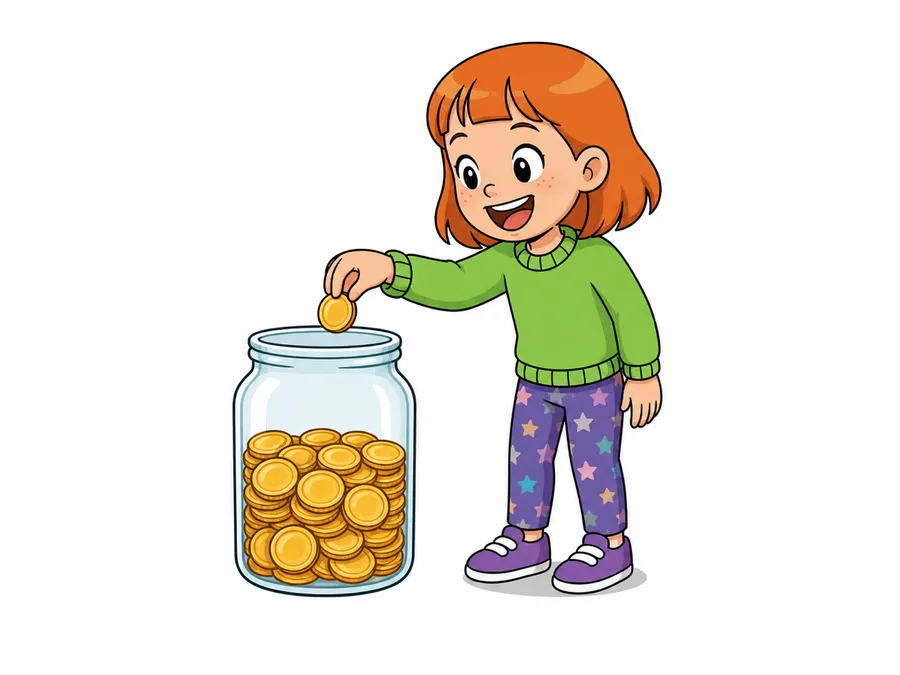
Clear jars beat a single piggy bank because the progress shows. A child watching the save jar fill toward a goal learns patience in a way a hidden number never teaches. Use real coins and small bills for young kids so the amounts feel concrete.

The split is not fixed. A five-year-old might put everything into spend and save and skip giving until sharing clicks. By the tween years the save jar takes a bigger cut as goals get bigger, and by the teens most of the money is theirs to plan. When the jars outgrow the shelf, the save jar graduates to a real account and the same habit carries over.


Which saving tool fits your child

Saving looks different at every age. Here is where to start, and the free tool that fits each stage.

Ages 3 to 5
Two jars, spend and save, with real coins they can count. Turn found money into a first split with the Tooth Fairy Calculator or a birthday gift.
Ages 6 to 8
Add the give jar and start sorting wants from needs. Try the Wants vs Needs Sorter and set a first savings goal.
Ages 9 to 12
Bigger goals and a parent match. Plan the whole week with the Kids Budget Planner and double their effort using the Savings Match Calculator.
Ages 13 to 17
Real budgets they run themselves. Split a teen paycheck with the Paycheck Budget Calculator and weigh giving with the Donation Impact Calculator.

Tools & Guides

9 free tools · no sign-up

Why Saving Is the Most Foundational Money Skill

The ability to delay gratification, putting money aside now for something better later, predicts financial stability well into adulthood. The good news: saving is a learnable habit. With the right structure, even a 5-year-old can feel the satisfaction of watching a jar fill up.

Age-Appropriate Saving Strategies

The approach should match your child's stage. What works for a 5-year-old frustrates a 13-year-old:

Ages 3-6
Clear jars and coin counting. Visible money beats a piggy bank, since kids can see progress and count along.
Ages 7-10
Goal-based saving. Pick a target, calculate how many weeks it takes, and track it on a chart.
Ages 11-13
Matching and interest. Double what they save each week toward a goal, like a kid-sized 401(k) match.
Ages 14+
Real accounts and budgets. Custodial bank account, debit card, and monthly budgeting they manage themselves.

Balancing Saving and Spending

Once kids start saving, the next challenge is balance. Over-emphasizing saving makes spending feel like failure and kills motivation. Structure allowance so both are built in: the 3-jar system gives kids guilt-free Spend money while the Save jar builds toward bigger goals. Use our Kids Budget Planner for a balanced budget at every age.

Teaching Wants vs. Needs

That balance gets easier when kids understand the core distinction behind every budget: wants versus needs. Needs keep you safe and healthy (food, shelter, clothing). Wants are everything else. Budgeting is not about eliminating wants. It is about covering needs first and giving wants their proper space. Try our Wants vs Needs Sorter to make this concept hands-on and memorable.

The Basics of Budgeting for Kids

With wants and needs sorted, kids are ready for their first real budget. A budget decides what to do with money before it arrives: what is coming in, what is going out, and what is being saved. Start weekly for younger kids, shift to monthly for teens. The habit of thinking about money before spending it matters more than the exact amounts.

Saving Questions, Answered

Raise kids who understand how money works

Download the app, add your child, and connect their phone or tablet by scanning a code. About a minute, no email needed for kids.

No ads. No data selling. No credit card.