Tooth Fairy Calculator
Your child just lost a tooth. Enter a few details to get a personalized per-tooth amount, see how it compares to the 2026 national average, and turn it into a first money lesson.
How much should the tooth fairy leave per tooth in 2026?
In 2026 the tooth fairy leaves about $5.84 per tooth on average, up 17% from $5.01 a year earlier, according to Delta Dental's Original Tooth Fairy Poll. A child's first lost tooth is worth more, averaging $7.17. Regional averages range from $5.27 in the Midwest to $6.45 in the Northeast, with the West at $5.99 and the South at $5.89.
Those are averages, not rules. Plenty of families leave a single dollar or a few coins per tooth and save a bigger gift for the first one. Whatever you pick, the two things that matter most are staying consistent between teeth and between siblings, and using the money as a small saving lesson. Enter your details below for a personalized amount and an age-appropriate save, spend, and give split.
Figures reviewed August 2026 against the Delta Dental 2026 Original Tooth Fairy Poll. Next update due February 2027, when the new poll is released.
2026 tooth fairy price list
- National average per tooth: $5.84 in 2026, up 17% from $5.01 in 2025 (Delta Dental 2026 Original Tooth Fairy Poll).
- First lost tooth: $7.17 on average, roughly 23% more than a routine tooth. The first tooth is the milestone families tend to mark with a bigger gift.
- By region: Northeast $6.45, West $5.99, South $5.89, Midwest $5.27. The Northeast and Midwest both jumped sharply this year.
- Cash vs. gifts: 32% of kids got a physical gift in 2026, up from 19% in 2025. Books, small toys, and a new toothbrush are common alternatives to cash.
How much does the tooth fairy give for the first tooth?
The first lost tooth averages $7.17 in 2026, about 23% above the $5.84 typical tooth. The bump makes sense: the first tooth only happens once, and most parents want to make it memorable. A common approach is a $5 bill plus a short note from the tooth fairy, rather than a handful of coins.
If you set a first-tooth amount, write it down. You will want to match it years later for a younger sibling, and by then inflation will have moved the goalposts. Select "first tooth" in the calculator to add the premium automatically.
Tooth fairy inflation: what a tooth was worth when you were a kid
If you remember getting a quarter under your pillow, that quarter was worth a lot less than $5.84. But tooth fairy gifts have actually grown faster than prices. A quarter in the mid-1990s is worth a little over 50 cents in today's money, yet the average gift today is $5.84, roughly ten times what many of us got. The tooth fairy has outpaced inflation.
The calculator's optional childhood comparison uses the Consumer Price Index (CPI-U annual averages from the U.S. Bureau of Labor Statistics) to convert what you got into today's dollars. It is a fun way to see how far the tradition has drifted, and a reminder that consistency matters more than matching any specific number.
| If you got this per tooth | In the | That is worth today |
|---|---|---|
| $0.25 | 1980s | about $0.75 |
| $0.25 | 1990s | about $0.53 |
| $1.00 | 2000s | about $1.65 |
| $2.00 | 2010s | about $2.72 |
Today's-dollar values use BLS CPI-U annual averages, with 2025 as the latest full-year index. Approximate, for illustration.
Tooth fairy rates by region (2026)
Where you live shifts the average by more than a dollar. The Northeast leads and the Midwest trails, though both saw big year-over-year jumps. Pick your region in the calculator to base the suggestion on your area.
| Region | Average per tooth (2026) |
|---|---|
| Northeast | $6.45 |
| West | $5.99 |
| South | $5.89 |
| Midwest | $5.27 |
| National | $5.84 |
Source: Delta Dental 2026 Original Tooth Fairy Poll, a survey of 1,000 parents of children ages 6 to 12 conducted in January 2026.
Make the tooth fairy a money lesson
A lost tooth is often a child's first bit of money that is truly their own. That makes it a good place to start simple money habits, without turning a magical moment into a lecture.
For younger kids (4 to 7)
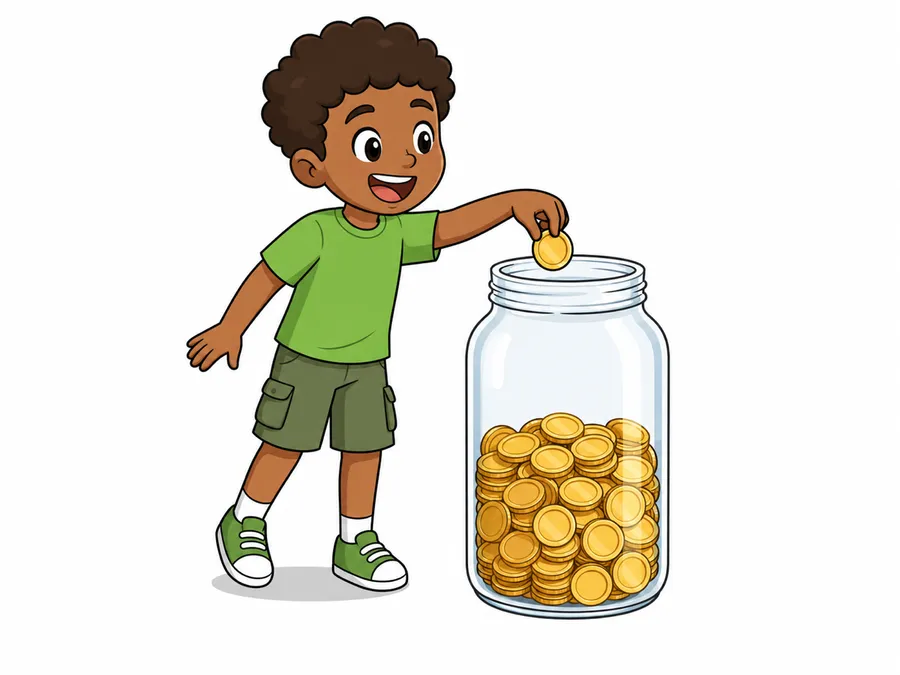
Keep it physical. A coin or two in a clear jar they can see does more for saving than a number in an account, because watching the pile grow is the whole point at this age. Let them spend some too; a first tooth spent on a small toy is not a failure, it is practice.
For older kids (8 to 12)
By now the money adds up. Across all their baby teeth, a child collects well over $100 at today's rates. That is enough to introduce a save, spend, and give split and a real goal to save toward. The calculator above suggests an age-appropriate split so each tooth becomes a small, repeatable lesson. If your child has outgrown the coin jar, some parents add the tooth fairy money to their kid's Penny Time balance with a short note, so the child logs in and watches the running total grow in their own history.
Frequently Asked Questions
-
The 2026 national average is $5.84 per tooth, up 17% from $5.01 in 2025, according to Delta Dental's Original Tooth Fairy Poll. A first lost tooth averages more, at $7.17. Regional averages run from $5.27 in the Midwest to $6.45 in the Northeast. Most families land somewhere between $1 and $5 for a routine tooth and go higher for the first one.
-
The first lost tooth averages $7.17 in 2026, about 23% more than a regular tooth. Families tend to mark the milestone with a bigger gift, sometimes a $5 bill instead of coins, or a small note from the tooth fairy. The calculator adds this first-tooth bump automatically when you select it.
-
No. At a $5.84 national average, a $5 gift is right in the normal range for 2026. What matters more than the number is staying consistent from tooth to tooth and child to child, so a younger sibling does not feel shortchanged later. Pick an amount you can repeat about 20 times, since that is how many baby teeth each child loses.
-
Cash is still the most common, but gifts are rising. In 2026, 32% of children received a physical gift alongside or instead of money, up from 19% the year before. Books, stickers, a new toothbrush, and small toys are typical. A gift can also sidestep the every-tooth cash creep if you would rather not raise the dollar amount each year.
-
Write down what you leave for each tooth so you can match it years later when the next child starts losing teeth. Inflation makes this tricky: a first tooth in 2020 and a first tooth in 2026 are not the same in dollars. Some families set a flat per-tooth rate that holds for everyone, then adjust only the first-tooth bonus.
-
For young children, coins in a clear jar they can see work better than a bank deposit, because watching the pile grow is what teaches saving at this age. As the amount adds up over a couple of years, a simple save, spend, and give split turns each tooth into a small money lesson. The calculator above suggests an age-appropriate split.

Raise kids who understand how money works
Download Penny Time


No ads. No data selling. No credit card.