Reviewed by the Penny Time editorial team
Part of our Money Skills hub.
Game-Based Learning vs Gamification in Kids' Financial Education: What the Research Actually Shows
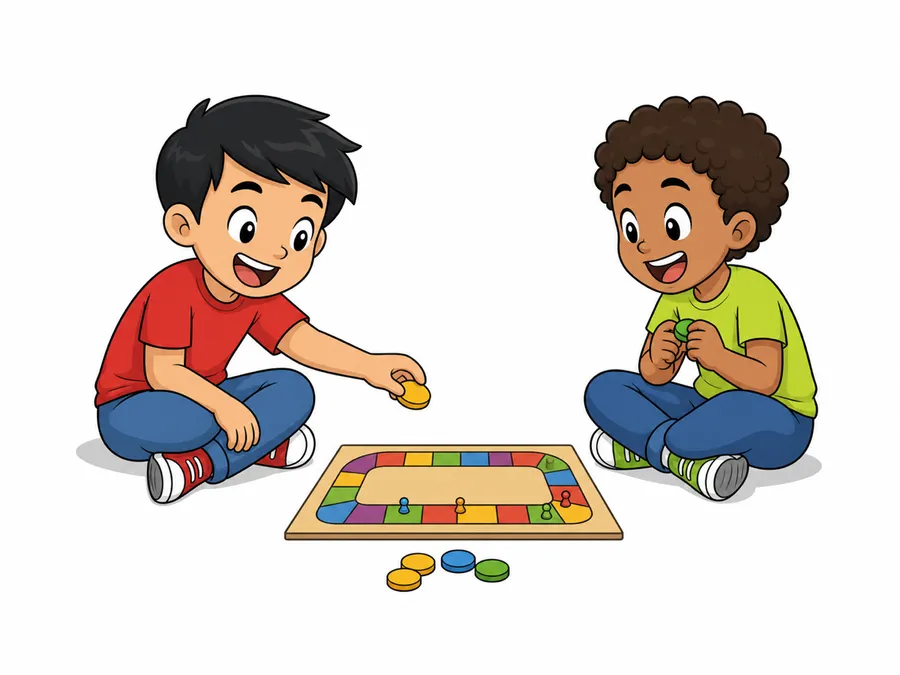
Game-based learning or gamification: which one teaches kids about money?
Game-based learning is the approach that changes behavior; gamification mostly does not. The difference is where the lesson sits. Gamification bolts points, badges, and streaks onto a lesson that would exist without them, like a worksheet with stickers or a video that earns coins. Game-based learning makes the game itself the lesson: to win or progress, the child has to make the real financial decision the game is teaching. The 2024 ResearchGate study on financial education games found that game-based learning drove a 30 percent increase in savings behavior, while gamified content did not produce a comparable effect. Most products in this space are the first kind, points layered on top of a lesson. When you choose a money game for your child, pick one where the decision that wins the game is a real money decision, not one where the money is just a theme around a reward.
Most parent guides treat 'gamified finance app' and 'game-based money learning' as synonyms. They are not the same thing, and the research gap between them is wide enough to change which apps and activities are worth your kid's time.
The distinction that actually matters
Gamification bolts game mechanics (points, badges, streaks, leaderboards) onto a lesson that would exist without them. A worksheet with stickers is gamified. A chore tracker that hands out gold stars is gamified. The lesson is the lesson; the game layer is decoration.
Game-based learning works the other way around. The game IS the lesson. To win or progress, the child has to make the financial decision the game is teaching. A grocery store simulation where kids cannot check out until their cart fits a $40 budget teaches budgeting in a way a points-for-reading-a-tip system does not.
This sounds like a semantic argument. The 2024 outcomes data says it is not.
What the 2024 ResearchGate study found
A 2024 study published on ResearchGate measured behavior change in children ages 8 to 14 using game-based financial learning compared to traditional instruction with gamified rewards. The results were not subtle:
- Engagement up 45 percent over standard lessons
- Savings behavior up 30 percent in the 90 days after the program
- Investment-related activity (tracking, asking questions, requesting custodial accounts) up 4x
The mechanism the researchers flagged: kids were making real choices inside the game, hitting real consequences (losing the round, running out of in-game money), and adjusting. They were not collecting points for watching a video.
UNDP, KidVestors, and the institutional read
The United Nations Development Programme ran a gamified financial literacy program for youth ages 12 to 18 across multiple emerging markets in 2023 and 2024. Their internal write-up makes the same split: the modules that drove measurable savings increases were simulation-based (run a market stall, manage a household budget), not the badge-collection modules.
KidVestors, one of the larger US-based kids investing platforms, frames its own curriculum the same way. Their published methodology distinguishes 'reward systems' from 'decision-based play' and explicitly designs around the second. The pattern across these three sources is consistent enough to call it the current consensus.
Why so much kids' finance content gets this wrong
Building a real game is expensive. Building a points system on top of a content library is cheap. Most apps in this category default to the cheap version and use the word 'gamified' in their marketing.
GoHenry is the clearest example of the opposite approach at scale. Their Pokemon and Disney IP partnerships fund actual game design where kids earn through play that teaches earning. It works. It is also unreplicable for anyone without a licensing budget.
What this looks like in practice (and what we built)
You do not need a licensing deal to do this at home. You need activities where the financial decision is the win condition.
Grocery Budget Game
Our Grocery Budget Game works because the kid cannot 'win' (fill the cart, feed the family for the week) without staying inside the budget. Going over means starting the round again. The lesson is not bolted on; it is the only path to the goal.
Kid Business Builder
The Kid Business Builder works the same way for earning. Kids pick a business idea, set prices, estimate costs, and the tool shows them whether the math actually produces profit. They iterate. The decision is the lesson.
What is NOT game-based learning
A chore chart with stickers is a tracking tool, not a game. Our chore chart is useful (and we built one) but it is gamified, not game-based. Same with an allowance calculator: the allowance calculator is a planning tool. Calling it a game would be inaccurate.
Tool comparison: what each one actually teaches
| Tool | Category | What it teaches | Best age |
|---|---|---|---|
| Grocery Budget Game | Game-based | Budgeting under constraint | 7-12 |
| Kid Business Builder | Game-based | Pricing, cost, profit | 9-14 |
| Birthday Money Calculator | Decision tool | Save/spend/give splits | 5-12 |
| Wants vs Needs | Sorting exercise | Spending categorization | 6-10 |
| Budget Planner | Planning tool | Allocating an allowance | 10+ |
| Chore Chart | Gamified tracker | Effort to earnings link | 4-10 |
| Allowance Calculator | Planning tool | Age-appropriate amounts | All |
How to evaluate any new tool or app
Before downloading the next 'gamified finance app' for your kid, run three checks:
- If you stripped out the points, badges, and streaks, would there still be a financial decision the kid has to make? If no, it is gamified content, not game-based learning.
- Does the kid lose the round, run out of resources, or fail the goal when they make a poor financial choice? If failure is impossible, the lesson is not load-bearing.
- Does success in the activity require applying a specific money concept, or just spending time in the app? Time-on-app is not learning.
The research is clear that the second category is what moves behavior. Most products in this space are the first category. Picking the right one matters more than picking 'a financial app.'
Frequently Asked Questions
-
Gamification adds points, badges, or rewards on top of a regular lesson (a worksheet with stickers, a video that earns coins). Game-based learning makes the game itself the lesson: the child has to make a real financial decision to win or progress. The 2024 ResearchGate study on financial education games found game-based learning drove a 30 percent increase in savings behavior, while gamified content did not produce a comparable effect.
-
Yes, but only the game-based kind. A 2024 study tracking kids ages 8 to 14 found engagement up 45 percent and investment-related activity up 4x using decision-based games. UNDP's 2023-2024 gamified literacy program for ages 12 to 18 found the same pattern: simulation modules (running a market stall, managing a budget) produced measurable savings gains, while badge-collection modules did not.
-
Decision-based games work as young as 4 or 5 with simple sorting activities (wants vs needs cards). Budget-constraint games like the Grocery Budget Game land best at 7 to 12 when kids can reliably do single-digit addition. Profit-and-loss games like the Kid Business Builder fit 9 to 14, when kids can handle multi-step math and abstract concepts like margin.
-
GoHenry is one of the few platforms doing real game-based learning at scale, largely because their Pokemon and Disney IP partnerships fund actual game design where earning is built into play. Most competitor apps default to gamified content (points for watching a tip, badges for completing a quiz) because licensed game development is expensive. The marketing language is similar; the underlying product is not.
-
Yes. A grocery trip with a fixed cash budget and a list is a game-based learning activity if the kid is the one making swap decisions when items exceed the budget. A lemonade stand where the child sets the price and pays for supplies upfront is game-based learning. The Penny Time Grocery Budget Game and Kid Business Builder are digital versions of activities parents have been running on kitchen tables for decades.

Raise kids who understand how money works
Download the app, add your child, and connect their phone or tablet by scanning a code. About a minute, no email needed for kids.


No ads. No data selling. No credit card.
Put this into practice this week
Add your child in Penny Time and, on their own phone or tablet, they can watch a real balance grow, take on quests, and ask for cash-outs you approve. Free for the whole family.